Create a School Calendar in Excel: DIY Grid, Terms, and Ready Workbooks

Create a school calendar in Excel with month grids, term dates, event layers, formulas, print settings, and a reusable workbook option.
Creating a school calendar in Excel sounds simple until the second teacher asks for early-release days, the office wants term breaks highlighted, and the printed copy cuts off Friday afternoon. A useful school calendar is more than twelve little month grids. It needs a clear academic-year structure, room for events, reliable formulas, and a layout that can be reused without rebuilding the whole file every summer.
Key takeaway: To create a school calendar in Excel that survives real use, separate the setup cells, month grids, event list, and print views instead of typing dates directly into every box.
This guide is the hub for the full topic cluster. Use it when you want the big picture: DIY options, formula choices, printable layouts, event overlays, and when a ready workbook saves more time than it costs. Microsoft Support notes that Excel calendar templates often include school-year layouts, notes columns, portrait or landscape print choices, and twelve-month or thirteen-month structures. Excel University shows how modern formulas such as SEQUENCE and WEEKDAY can generate month grids from a few inputs. Smartsheet's DIY walkthrough reinforces the basics: weekday headers, date boxes, borders, and template downloads. Calendarpedia's year packs show the market expectation for August-to-July academic calendars, but this article keeps the approach evergreen so you are not tied to one expired school year.
Start With the Calendar Job
Before formulas, decide what the calendar must do. A family calendar for one child has different needs than a school-office calendar used by staff, students, and parents. The first may need field trips, exams, and no-school days. The second may need term dates, board meetings, professional development days, testing windows, and printable monthly handouts.
Do not mix this with a class schedule. A class schedule answers "what happens every Tuesday at 10:00." A school calendar answers "what dates matter across the academic year." Do not mix it with attendance either. Attendance records who was present on a specific day. Your calendar can mark "school closed" or "quarter ends," but it should not become the attendance ledger. Keeping those boundaries clean makes the Excel file easier to trust.
Choose the Workbook Shape
There are three solid ways to build a school calendar in Excel. The simplest is a manual monthly grid: type the first date, use fill handles, add labels, and format for print. It is fast, but it becomes fragile when the year changes. The second is a formula-driven workbook: choose a start year and first month, then let formulas populate dates. It takes longer to build, but it is much easier to reuse. The third is a ready workbook with setup instructions and designed pages, useful when you need a polished file today.
[TABLE: DIY vs formula workbook vs ready workbook]
| Option | Best for | Watch out for |
|---|---|---|
| Manual month grids | One-off calendars and small edits | Easy to leave old dates hidden in copied sheets |
| Formula-driven workbook | Reusable school calendars | Needs careful setup cells and testing |
| Ready workbook | Faster launch and cleaner design | Still requires your school's real dates |
Build the Foundation
Create the core school calendar workbook
- Create a Setup sheet with academic year label, first month, first year, school name, and optional region.
- Add a Months sheet or twelve month tabs depending on whether you prefer one print view or one tab per month.
- Use date formulas so each month grid calculates from the setup cells rather than typed dates.
- Create an Events sheet with Date, Event, Category, Audience, Notes, and optional Publish? columns.
- Use conditional formatting to highlight weekends, school holidays, term breaks, and today.
- Set print areas for each month before you share the file as a PDF.
- Protect formula cells after testing so editors can add events without breaking the calendar engine.
This structure is slower than typing dates into boxes, but it pays back the first time a district shifts a professional development day. Change one event row and the month view updates. Change the setup year and you can create the next academic cycle without hunting for every old date.
Month Grids That Do Not Fight You
A month grid usually needs six rows by seven columns. Some months spill into a sixth week, and forcing every month into five rows causes ugly exceptions. Use weekday headers that match your audience. Sunday-start calendars are familiar for many US families; Monday-start calendars can be better for school operations. Pick one and use it consistently.
If you are using Microsoft 365 or current Excel, a modern formula can generate a month grid with SEQUENCE, DATE, and WEEKDAY. If your users may open the workbook in older Excel, build with traditional formulas such as DATE(year,month,1) plus weekday offsets. Either way, keep formulas out of the visible event labels. Dates should calculate; event text should come from a tidy Events sheet.
Warning: Do not type event names directly into date cells if more than one person will maintain the calendar. Direct typing feels quick but makes sorting, filtering, proofreading, and year rollover much harder.
Add Terms, Breaks, and Event Layers
Schools think in layers. There is the date grid, then term boundaries, then closures, then events, then internal reminders. Put those layers into categories instead of relying on colors alone. For example: No School, Holiday, Exam, Sports, Staff, Board, Deadline, and Family. Color can help, but the category text is what lets you filter and audit the list later.
The event list can be simple: Date, Event, Category, Audience, Notes. If you manage multiple campuses, add Campus. If you publish some items to families and keep others internal, add Publish? and filter before exporting a parent-facing PDF. A calendar should reduce questions, not accidentally leak staff-only reminders.
When a Ready Workbook Makes Sense
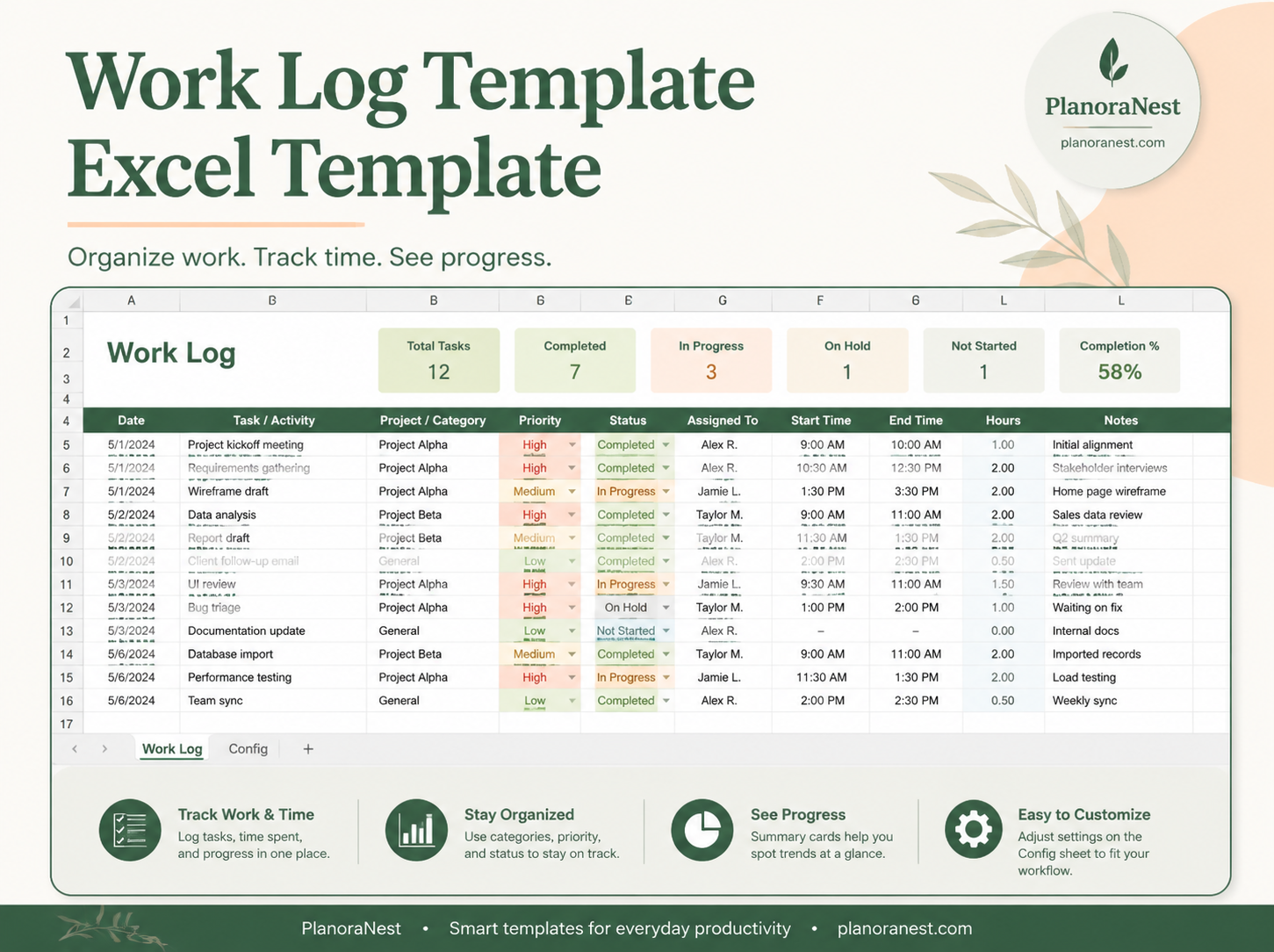
DIY is worth learning because it gives you control. Still, there are times when you want the workbook structure already handled. The Create School Calendar Excel Template from PlanoNest — disclosure: we sell it — is an instant download and a one-time purchase designed for people who want to customize a school calendar without starting from a blank grid. Check the product page for the current details.
A template is not magic. You still need your actual term dates, closures, and event names. The benefit is that setup sheets, print decisions, and layout choices are already made, so your work shifts from "how should this file be built?" to "what does our school year include?"
Quality Checks Before Sharing
Test January, February, and the month where your academic year starts. Confirm leap-year behavior if February matters. Print one month to PDF and inspect margins. Filter the Events sheet for blanks in Date or Event. Check that every no-school day appears in the correct month. Then save a clean copy before inviting edits.
- How to create a school calendar in Excel
- Build a school calendar in Excel
- School calendar Excel formulas
- Printable school calendar Excel
- School event calendar Excel
Frequently Asked Questions
Can I create a school calendar in Excel without templates?
Yes. Start with a setup sheet, create a six-row monthly grid, add an event list, and use formulas or careful fill patterns to populate dates. A template simply speeds up the structure and design work.
Should a school calendar use one sheet or twelve tabs?
Use one sheet when you want a year-at-a-glance or compact printout. Use twelve tabs when each month needs event detail and clean PDF export. Many schools benefit from both views.
What is the biggest mistake in a DIY school calendar?
The biggest mistake is typing dates and events directly into decorative boxes. Use formulas for dates and a structured event list for event text so the workbook remains editable.
Small Operating Details
A useful final habit is version naming. Keep a master workbook, an editable working copy, and dated PDF exports. That sounds fussy until someone forwards an old calendar and the office has to explain which copy is current. Put the version date in the footer or file name, and keep archived PDFs in a folder by academic year.
If multiple people provide dates, collect them in a list before editing the workbook. A single intake list prevents the calendar owner from piecing together emails, chat messages, and hallway notes. The more official the calendar becomes, the more boring the input process should be.