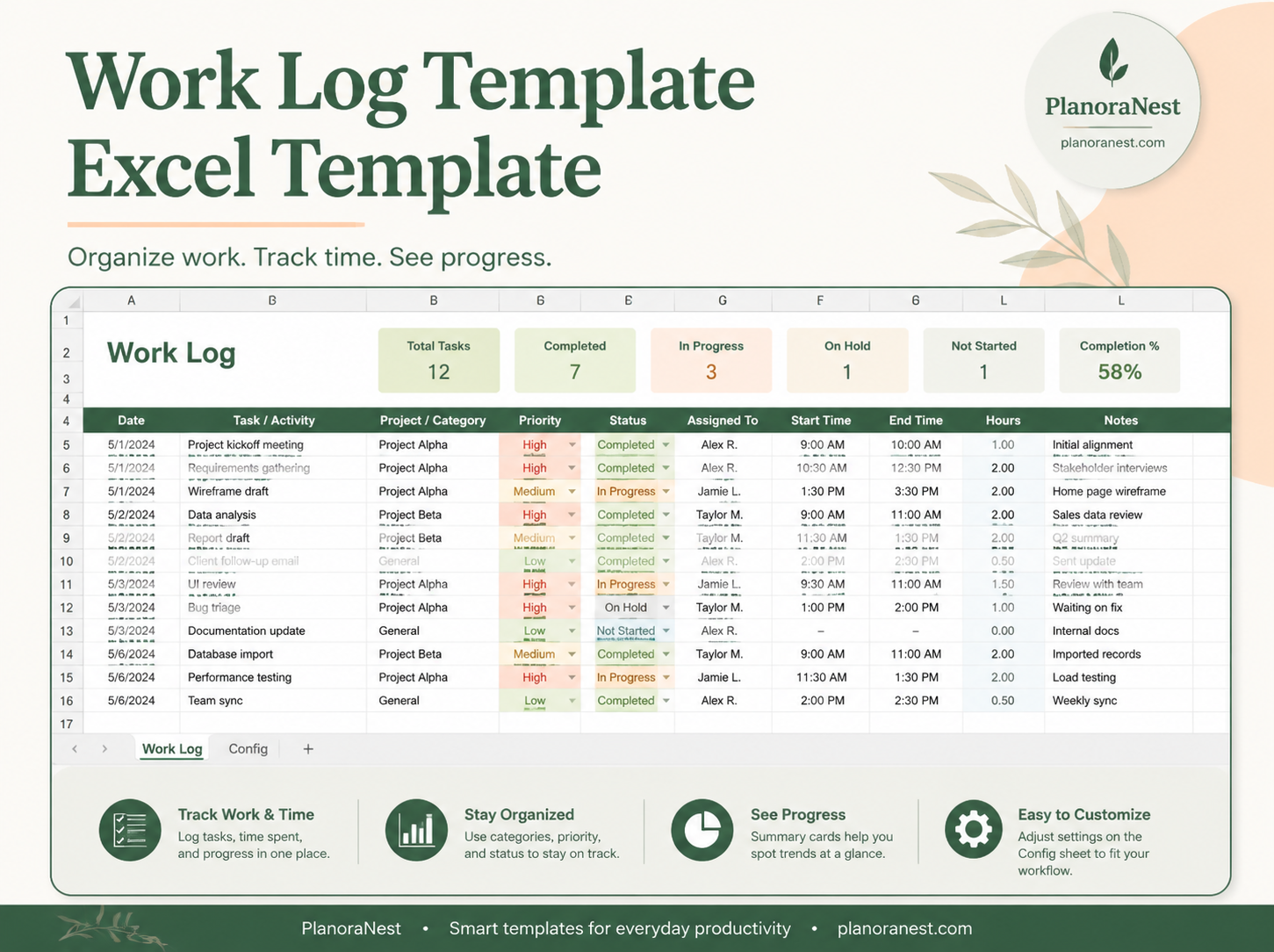
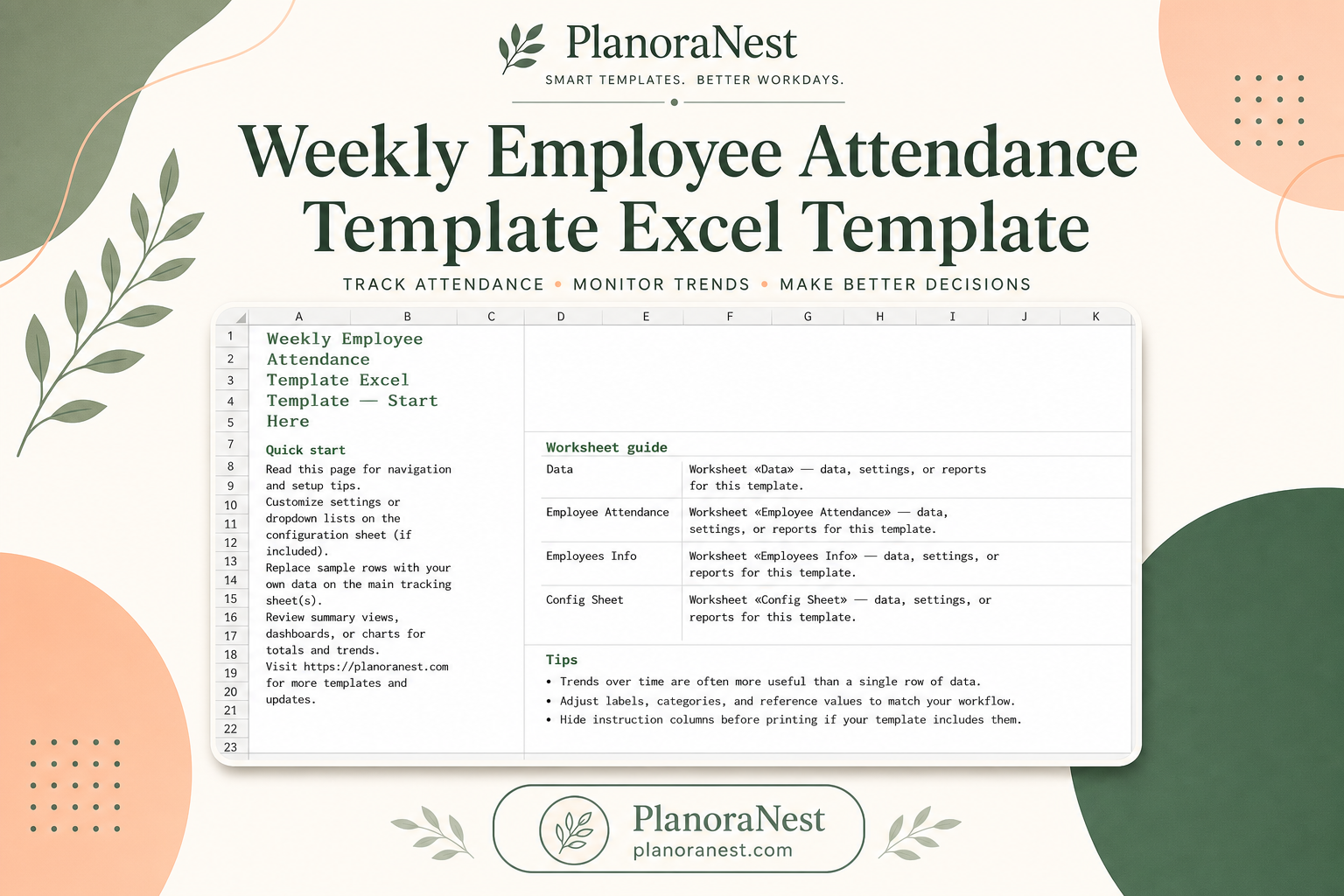
Employee Schedule Template Excel: Build a Monthly Staff Roster That Sticks

Choose an employee schedule template in Excel for monthly staff rosters: layout, coverage totals, weekly vs monthly, free vs structured, and DIY tips.
An employee schedule template excel file is a staff roster — who works which shift on which day — not a personal to-do list, not a school class timetable, and not a fleet maintenance calendar. Managers use it to see coverage at a glance, fix understaffed days before they hit the floor, and share one source of truth with the team.
Key takeaway: For monthly employee work schedules, pick a workbook with employee rows (or columns), day cells across the month, clear shift codes, daily coverage totals, and a Start Here sheet. Prefer reusable shift dropdowns over free-typed chaos.
What This Guide Covers (and What It Does Not)
This cluster is about monthly employee work schedules in Excel: retail and restaurant floors, clinics, warehouses, and small office teams. It is not about vehicle service intervals, homework task lists, college course grids, or customer appointment signup sheets.
If you need those other tools, look for a different template family. Here we stay on staff rostering.
What a Usable Employee Schedule Template Must Include
Before you download anything labeled “schedule,” check for:
- People axis — employee names (and optional roles: cashier, opener, RN)
- Time axis — days of a month, or a week you can roll forward
- Shift cells — codes such as AM / PM / OFF, or start–end times
- Coverage totals — COUNTIF or COUNTA so each day shows headcount needed vs filled
- Print path — landscape one-page or clear page breaks for the break room
- Onboarding — a short Start Here note so the next manager does not break formulas
Microsoft’s Excel Create gallery, Smartsheet’s weekly and shift downloads, When I Work’s Excel template walkthrough, and ZoomShift’s DIY guide all converge on the same idea: standardize shifts once, assign with dropdowns, and let formulas total hours.
Monthly vs Weekly Views
A monthly grid answers: “Do we have enough openers across the next 30 days?” A weekly grid answers: “Who closes Thursday?” Many teams keep both — monthly for planning PTO and hiring, weekly for posting the live roster.
[INTERNAL_LINK: → weekly-employee-schedule-template-excel] For the 7-day deep dive, see Weekly employee schedule template Excel. [/INTERNAL_LINK]
In this cluster
- Weekly employee schedule template Excel
- Employee schedule format Excel
- Sample employee schedule Excel
- Employee work schedule template Excel
- Employee scheduling software free Excel
Free Downloads vs Structured Workbooks
SERP results are packed with free options: Microsoft schedule templates, Smartsheet employee shift sheets, Time Clock MTS shift packs, When I Work’s printable Excel file, and ProjectManager’s employee schedule download. Free files are fine for a one-week experiment.
Gaps show up when you need:
- A month view that does not force you to rebuild every Sunday
- A Help or Start Here sheet that documents shift codes
- Consistent columns across copies you hand to assistant managers
- Instant digital delivery that opens in Excel, Google Sheets, WPS, or LibreOffice Calc
Sites such as Vertex42 appear in image packs and research SERPs; mention them only in plain text if needed — do not outbound-link competitor template shops in published copy. For a paid structured option, PlanoNest’s Downloadable Monthly Employee Schedule Template Excel (disclosure: we sell it) is a one-time purchase with Schedule and Help sheets aimed at monthly employee rosters. Check the product page for live pricing — we do not hard-code dollar amounts here.
Free / DIY
- Pros: zero cost, quick trial, lots of weekly layouts
- Cons: weak month views, uneven print setup, easy to overwrite formulas
Structured workbook
- Pros: clearer onboarding, stable layout, ready for monthly coverage
- Cons: one-time purchase instead of free download
Layout Patterns That Survive Real Shifts
Employees down, days across
Best for monthly calendars: each row is a person; each column is a date. Shift codes fill cells. A bottom row uses =COUNTIF(range,"<>OFF") (or similar) for coverage.
Days down, employees across
Works for small teams (under ~8 people) when you want tall daily notes. Gets wide fast.
Separate Employees and Shifts tabs
When I Work’s Excel template pattern — Employees tab, Shifts tab, then main schedule with dropdowns — reduces typos. Mirror that idea even in a monthly sheet: keep legal shift names on a list sheet.
[INTERNAL_LINK: → employee-schedule-format-excel] Column standards are spelled out in Employee schedule format Excel. [/INTERNAL_LINK]
DIY Starter Path (If You Build From Blank)
DIY monthly employee schedule
- New workbook — rename sheets Schedule, Employees, Shifts, Help.
- Employees list — Name, Role, Max hours, Notes.
- Shifts list — Code, Start, End, Hours (helper column).
- Schedule grid — row headers = names; column headers = dates for the month.
- Data validation — dropdown from Shifts codes into every schedule cell.
- Coverage row — COUNTIF / COUNTA under each date column.
- Freeze — freeze name column and date row.
- Print — landscape, fit columns to page width, set print area.
ZoomShift’s 10-step weekly DIY is a useful weekly cousin; for monthly work, extend the date headers to the full calendar month and hide unused weekend columns only if your shop is closed those days.
Coverage, Hours, and Overtime Flags
Managers lose trust when the sheet cannot answer “are we short tomorrow?” Add:
- Daily headcount vs “needed” target row
- Per-employee weekly hour SUMIF (even inside a monthly sheet)
- Conditional formatting when hours exceed a soft OT threshold
[INTERNAL_LINK: → employee-work-schedule-template-excel] Hour and role details live in Employee work schedule template Excel. [/INTERNAL_LINK]
Warning: Do not treat this workbook as legal advice for wage-and-hour rules. Use it as an operations checklist; confirm OT policy with your payroll process.
Reading a Sample Before You Customize
[INTERNAL_LINK: → sample-employee-schedule-excel] Walk a filled example in Sample employee schedule Excel before you wipe demo names. [/INTERNAL_LINK]
When Spreadsheets Stop Scaling
Excel shines for teams that publish a roster once or twice a week and handle swaps in person or by group chat. When you need employee self-service swaps, push notifications, or multi-location permissions, compare free apps honestly.
[INTERNAL_LINK: → employee-scheduling-software-free-excel] See Employee scheduling software free Excel for the break-even checklist. [/INTERNAL_LINK]
Buy Checklist for a Monthly Employee Schedule Template
| Check | Why it matters |
|---|---|
| Month grid or easy month copy | Avoid rebuilding dates weekly |
| Shift dropdown source list | Fewer typos than free text |
| Coverage totals | Spot understaffed days |
| Start Here / Help | Next manager can run it |
| Print-ready landscape | Break-room posting |
| Works in Sheets / WPS | Team may not all have Excel |
Frequently Asked Questions
Does Excel have a built-in employee schedule template?
Yes. Microsoft’s Excel Create / template gallery includes schedule layouts. They are a solid start; many teams still add custom shift codes and monthly coverage rows.
What is the best format for a staff roster in Excel?
Employee names on rows, dates on columns, shift codes in cells, and a coverage total row. Keep a separate list of valid shifts for dropdowns.
Can I use the same file for weekly and monthly planning?
Yes. Keep a monthly planning sheet and a weekly posting sheet, or copy the week range from the month view. Do not mix customer appointments into the same grid.
Should I use free templates or a paid workbook?
Try free first. Move to a structured one-time-purchase workbook when you need stable onboarding, Help sheets, and a layout that survives manager handoffs. Live pricing for PlanoNest is on the product page.
Extra Practical Notes
Keep one owner for the live roster file and archive dated copies after each publish. Prefer shift dropdowns over free text so coverage formulas stay trustworthy. Print landscape PDFs for the break room when Excel margins misbehave on shared PCs. Separate employee staffing from customer appointments and class timetables. Review overtime flags with payroll before treating spreadsheet highlights as final. Duplicate weekly sheets instead of overwriting history when disputes arise. Document PTO on the monthly view before filling the weekly posting grid. Train assistant managers on which cells are safe to edit versus formula-protected. Keep one owner for the live roster file and archive dated copies after each publish. Prefer shift dropdowns over free text so coverage formulas stay trustworthy. Print landscape PDFs for the break room when Excel margins misbehave on shared PCs. Separate employee staffing from customer appointments and class timetables. Review overtime flags with payroll before treating spreadsheet highlights as final. Duplicate weekly sheets instead of overwriting history when disputes arise. Document PTO on the monthly view before filling the weekly posting grid. Train assistant managers on which cells are safe to edit versus formula-protected. Keep one owner for the live roster file and archive dated copies after each publish. Prefer shift dropdowns over free text so coverage formulas stay trustworthy. Print landscape PDFs for the break room when Excel margins misbehave on shared PCs. Separate employee staffing from customer appointments and class timetables. Review overtime flags with payroll before treating spreadsheet highlights as final. Duplicate weekly sheets instead of overwriting history when disputes arise. Document PTO on the monthly view before filling the weekly posting grid. Train assistant managers on which cells are safe to edit versus formula-protected. Keep one owner for the live roster file and archive dated copies after each publish. Prefer shift dropdowns over free text so coverage formulas stay trustworthy. Print landscape PDFs for the break room when Excel margins misbehave on shared PCs. Separate employee staffing from customer appointments and class timetables. Review overtime flags with payroll before treating spreadsheet highlights as final. Duplicate weekly sheets instead of overwriting history when disputes arise. Document PTO on the monthly view before filling the weekly posting grid. Train assistant managers on which cells are safe to edit versus formula-protected. Keep one owner for the live roster file and archive dated copies after each publish. Prefer shift dropdowns over free text so coverage formulas stay trustworthy. Print landscape PDFs for the break room when Excel margins misbehave on shared PCs. Separate employee staffing from customer appointments and class timetables. Review overtime flags with payroll before treating spreadsheet highlights as final. Duplicate weekly sheets instead of overwriting history when disputes arise. Document PTO on the monthly view before filling the weekly posting grid. Train assistant managers on which cells are safe to edit versus formula-protected. Keep one owner for the live roster file and archive dated copies after each publish. Prefer shift dropdowns over free text so coverage formulas stay trustworthy. Print landscape PDFs for the break room when Excel margins misbehave on shared PCs. Separate employee staffing from customer appointments and class timetables. Review overtime flags with payroll before treating spreadsheet highlights as final. Duplicate weekly sheets instead of overwriting history when disputes arise. Document PTO on the monthly view before filling the weekly posting grid. Train assistant managers on which cells are safe to edit versus formula-protected. Keep one owner for the live roster file and archive dated copies after each publish. Prefer shift dropdowns over free text so coverage formulas stay trustworthy. Print landscape PDFs for the break room when Excel margins misbehave on shared PCs. Separate employee staffing from customer appointments and class timetables. Review overtime flags with payroll before treating spreadsheet highlights as final. Duplicate weekly sheets instead of overwriting history when disputes arise. Document PTO on the monthly view before filling the weekly posting grid. Train assistant managers on which cells are safe to edit versus formula-protected. Keep one owner for the live roster file and archive dated copies after each publish. Prefer shift dropdowns over free text so coverage formulas stay trustworthy. Print landscape PDFs for the break room when Excel margins misbehave on shared PCs. Separate employee staffing from customer appointments and class timetables. Review overtime flags with payroll before treating spreadsheet highlights as final. Duplicate weekly sheets instead of overwriting history when disputes arise. Document PTO on the monthly view before filling the weekly posting grid. Train assistant managers on which cells are safe to edit versus formula-protected. Keep one owner for the live roster file and archive dated copies after each publish. Prefer shift dropdowns over free text so coverage formulas stay trustworthy. Print landscape PDFs for the break room when Excel margins misbehave on shared PCs. Separate employee staffing from customer appointments and class timetables. Review overtime flags with payroll before treating spreadsheet highlights as final. Duplicate weekly sheets instead of overwriting history when disputes arise. Document PTO on the monthly view before filling the weekly posting grid. Train assistant managers on which cells are safe to edit versus formula-protected. Keep one owner for the live roster file and archive dated copies after each publish. Prefer shift dropdowns over free text so coverage formulas stay trustworthy. Print landscape PDFs for the break room when Excel margins misbehave on shared PCs. Separate employee staffing from customer appointments and class timetables. Review overtime flags with payroll before treating spreadsheet highlights as final. Duplicate weekly sheets instead of overwriting history when disputes arise. Document PTO on the monthly view before filling the weekly posting grid. Train assistant managers on which cells are safe to edit versus formula-protected. Keep one owner for the live roster file and archive dated copies after each publish. Prefer shift dropdowns over free text so coverage formulas stay trustworthy. Print landscape PDFs for the break room when Excel margins misbehave on shared PCs. Separate employee staffing from customer appointments and class timetables. Review overtime flags with payroll before treating spreadsheet highlights as final. Duplicate weekly sheets instead of overwriting history when disputes arise. Document PTO on the monthly view before filling the weekly posting grid. Train assistant managers on which cells are safe to edit versus formula-protected. Keep one owner for the live roster file and archive dated copies after each publish. Prefer shift dropdowns over free text so coverage formulas stay trustworthy. Print landscape PDFs for the break room when Excel margins misbehave on shared PCs. Separate employee staffing from customer appointments and class timetables. Review overtime flags with payroll before treating spreadsheet highlights as final. Duplicate weekly sheets instead of overwriting history when disputes arise. Document PTO on the monthly view before filling the weekly posting grid. Train assistant managers on which cells are safe to edit versus formula-protected.
Conclusion
A durable employee schedule template excel setup is a monthly staff roster with clear people, dates, shift codes, and coverage math — not a task list or class timetable. Start with Microsoft or Smartsheet free files if you are testing; graduate to a structured workbook like PlanoNest’s monthly employee schedule template when you want Schedule + Help sheets without rebuilding every month. Explore the cluster guides above for weekly grids, formats, samples, work-hours detail, and spreadsheet-vs-software decisions.