Excel Weekly Calendar Template: Setup and Daily Use

Set up an excel weekly calendar template with week-start rules, frozen headers, and habits that keep Week 1 through Week 52 consistent.
An excel weekly calendar template fails for boring reasons: Sunday vs Monday confusion, unfrozen headers, and people typing over date formulas. Setup takes fifteen minutes and saves fifty weeks of cleanup.
Selection context lives in the 52 week calendar template excel hub.
Key takeaway: Lock week-start, freeze headers, protect date cells, and enter plans in notes/task columns — not inside the date engine.
First-Open Ritual
First open of a weekly Excel calendar
- Enable editing if Protected View blocks the sheet.
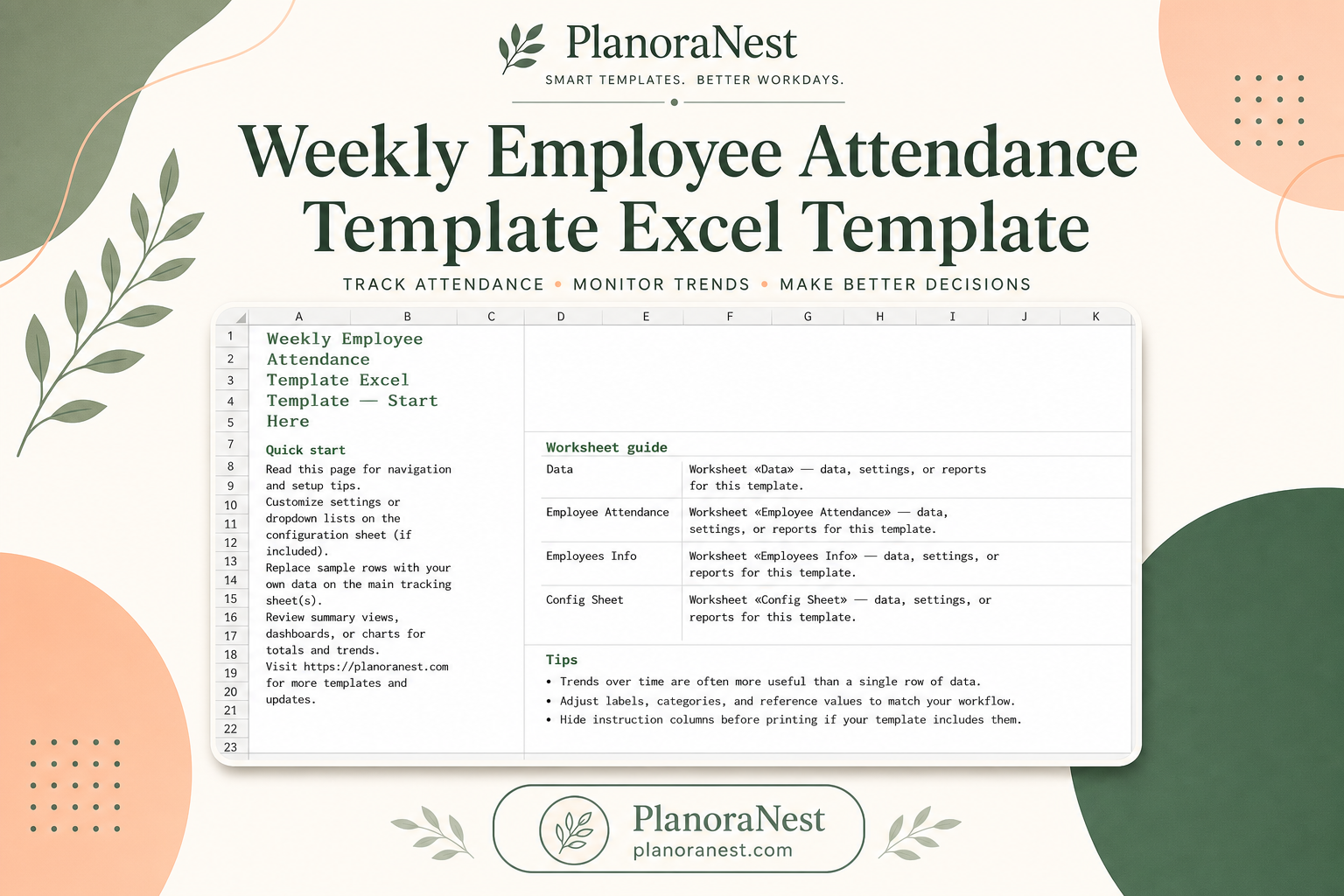
- Read Start Here (or write your own rules on a Notes tab).
- Set the year and week-start day in the control cells.
- Confirm Week 1 date range matches your calendar.
- Freeze the top row(s).
- Save As
weekly-calendar-YYYY-team.xlsxbefore anyone else edits.
Microsoft Support’s Excel calendar template guidance still applies: download, edit, and store a known copy outside Downloads chaos. Smartsheet’s weekly packs add the habit of naming the week start date at the top so auto-filled dates stay honest.
Daily and Weekly Habits
- Capture commitments the day they appear — do not batch five days of memory into Friday.
- Use Status or checkbox columns if the template provides them; invent one if it does not.
- Keep recurring rituals on a separate “Repeating” list and copy into the week, rather than rebuilding from scratch.
- At week close, archive a PDF of the week if auditors or clients need a paper trail.
Warning: Filters that hide completed rows can make a week look empty while overdue items still exist. Clear filters before you declare the week done.
Bridging One Week to Fifty-Two
If your file is a single weekly page, duplicate it deliberately:
- Copy the sheet → rename
Week02. - Update the start date control (or paste +7 if formulas expect it).
- Clear task cells, keep formatting.
- Repeat — or switch to a prebuilt 52-week workbook when this becomes a chore.
DIY duplication is how many operators discover they actually wanted a 52 week calendar template excel in the first place. PlanoNest’s product workbook (disclosure: we sell it) ships week-oriented sheets with Start Here onboarding for that jump. Pricing stays on the product page.
See also: weekly calendar template excel selection and 52 week planner template excel.
Collaboration Rules That Prevent Chaos
One editor at a time in desktop Excel unless you truly live in co-authoring. In Google Sheets, restrict who can edit date headers. Put a Changelog row on Start Here: date, person, what changed. When formulas break, restore from the archive instead of “fixing live.”
Color legend: limit to Work / Personal / Deadline — or Ops / Sales / Risk for teams. More than four colors and nobody remembers the legend.
Formatting Details That Matter Midyear
Set column widths once on Week1 and copy across sheets. Use Wrap Text on task cells only. Number formats for dates should be unambiguous (2026-03-16 or 16-Mar) — avoid locale-swapped ambiguity when US and EU teammates share files.
Print area should include the week header and the notes row. Exclude scratch columns. Set margins to narrow only after you confirm text still fits; ultra-narrow margins clip binders.
Keep a 52-week workbook usable in week 30
A 52 week calendar template excel only earns its disk space if you still open it in midyear. Name files with the year (52-week-calendar-2026-v1.xlsx), keep a read-only archive after major holiday edits, and resist duplicating Week tabs when you only needed one note field. If you collaborate in Google Sheets, upload once and pin the Share link in your team wiki — not in twelve Slack threads.
When someone asks for "the yearly calendar," clarify whether they want a month-grid year poster or a week-numbered year system. This cluster is for the second job: Week 1 through Week 52 with editable planning rows. Mixing academic August–June grids into a January–December week calendar creates duplicate weeks every time August rolls around.
Print a quarter at a time if full-year week sheets jam the office copier. Week overview is for orientation; detailed weekly sheets are for daily notes. That split mirrors how most teams actually plan.
Troubleshooting weekly-year calendar friction
Week numbers look wrong after you copied a row. Week calendars are position-sensitive. Copy entire week blocks, not single cells, unless you built the sheet with ISOWEEKNUM formulas that recalc automatically.
Print preview shows six blank pages. Clear accidental print areas (Page Layout → Print Area → Clear) and confirm only the intended week sheet is active.
Google Sheets shifted Monday/Sunday labels. Re-upload the .xlsx or reapply header labels — week-start conventions do not always survive round-trips unchanged.
Holidays sit on the wrong week. US federal defaults are common in free files. Replace them on an editable notes layer instead of overwriting date formulas.
Someone deleted the Start Here sheet. Restore from your archive copy. Onboarding tabs exist because yearly week workbooks are opened once a year — memory does not scale.
When a structured template beats another free download
Free weekly calendars are excellent for learning and one-off prints. They get painful when:
- You need both a 52-week spine and weekly detail in one file without rebuilding tabs every January.
- Non-Excel teammates rely on Start Here instructions instead of asking you to rebuild formulas.
- You print weekly pages repeatedly and need consistent margins already tested.
- You want one-time purchase delivery instead of hunting broken roundup links in March.
Stay on free or DIY when you only need a single week poster, a classroom exercise, or a disposable event countdown. The decision is time, not morality — pick the path that still looks correct on Week 52.
Frequently Asked Questions
How do I automate weekly dates in Excel?
Put the week-start date in one cell and reference it with +1, +2, … across day headers, or use SEQUENCE. Protect that control cell.
Can the template update itself every Monday?
With formulas yes; with static pasted dates no. Prefer formula-driven headers if you duplicate sheets all year.
Should I use Excel Tables inside a weekly calendar?
Tables help for task lists beneath the grid. Be careful converting the calendar grid itself — merged day headers often fight Table behavior.
What if my team mixes Excel and Sheets?
Pick one system of record. Round-tripping weekly can quietly drop validation and print settings.
Is an hourly template required?
Only if you schedule by the clock. Many ops calendars need day columns and task rows — hours are optional noise.
Keep a 52-week workbook usable in week 30
A 52 week calendar template excel only earns its disk space if you still open it in midyear. Name files with the year (52-week-calendar-2026-v1.xlsx), keep a read-only archive after major holiday edits, and resist duplicating Week tabs when you only needed one note field. If you collaborate in Google Sheets, upload once and pin the Share link in your team wiki — not in twelve Slack threads.
When someone asks for "the yearly calendar," clarify whether they want a month-grid year poster or a week-numbered year system. This cluster is for the second job: Week 1 through Week 52 with editable planning rows. Mixing academic August–June grids into a January–December week calendar creates duplicate weeks every time August rolls around.
Print a quarter at a time if full-year week sheets jam the office copier. Week overview is for orientation; detailed weekly sheets are for daily notes. That split mirrors how most teams actually plan.
Troubleshooting weekly-year calendar friction
Week numbers look wrong after you copied a row. Week calendars are position-sensitive. Copy entire week blocks, not single cells, unless you built the sheet with ISOWEEKNUM formulas that recalc automatically.
Print preview shows six blank pages. Clear accidental print areas (Page Layout → Print Area → Clear) and confirm only the intended week sheet is active.
Google Sheets shifted Monday/Sunday labels. Re-upload the .xlsx or reapply header labels — week-start conventions do not always survive round-trips unchanged.
Holidays sit on the wrong week. US federal defaults are common in free files. Replace them on an editable notes layer instead of overwriting date formulas.
Someone deleted the Start Here sheet. Restore from your archive copy. Onboarding tabs exist because yearly week workbooks are opened once a year — memory does not scale.