To Do List Excel: Habits That Keep Spreadsheets Honest

Practical to do list Excel habits for solo and small-team work — status words, filters, and when to stop DIY.
Searching to do list excel usually means you already rejected another app trial. Excel is familiar. The failure mode is cultural, not technical: vague tasks, infinite High priorities, and filters that hide unfinished work until Friday panic.
For the full selection guide, see Excel to do list template hub.
Key takeaway: Make Excel honest: one status vocabulary, short open queues, weekly archives, and a refusal to treat the grid like a project Gantt or a timesheet.
Habits that matter more than themes
- Verb-first tasks — “Email Lara the draft,” not “Lara.”
- Finite High — three or fewer active High items.
- Waiting is a status — blocked work should not look In progress.
- Archive Done — working lists should feel light.
- Review twice — morning selection, evening close.
Pros of Excel for to-dos
- Portable
.xlsx; easy backups - Tables + filters scale past sticky notes
- Dropdowns enforce shared language
Cons
- Weak native reminders
- Messy when five editors co-author casually
- Temptation to overbuild dashboards
Solo vs small team
Solo: one ToDoList + Lists sheet is enough. Optional Daily sheet for focus.
Small team: add Owner; agree Status words in writing; store the file in one shared location; discourage emailed copies. If you need comments, @mentions, and automations, Excel is a bridge — not the destination.
Reddit threads on r/excel often ask for “automated comprehensive” to-dos. Automations are optional. Consistency is not.
Morning selection, evening close
Treat the workbook like a shift handoff to yourself. Morning selection picks the few rows that deserve attention; evening close writes honest Status and Due dates. Skipping evening close is how Monday inherits Friday’s fiction. Keep the ritual under fifteen minutes total or you will invent reasons to avoid it.
Layout patterns that stay readable
Layout patterns
| Pattern | Best for | Watch-out |
|---|---|---|
| Flat Table | Most people | Over-wide columns |
| Priority dashboard colors | Visual scanners | Color without validation |
| Daily + master two-sheet | Focus seekers | Sync discipline |
| Checkbox + Status both | Satisfaction seekers | Redundant states if both disagree |
Prefer Data Validation over free-typed status. Prefer Microsoft’s drop-down guidance when teaching teammates. Deep dive: How to Add a Drop-Down List to an Excel To-Do List.
Failure modes to name out loud
The museum list — everything ever imagined, nothing finished.
The optimism list — fourteen High items due today.
The shame archive — deleting unfinished work instead of rolling it.
The hybrid monster — hours, packing steps, and OKRs on one grid.
Warning: If you need delivery confirmation signatures or class schedules, use those specialized templates. A general to-do sheet will fight you.
Shared language beats fancy dashboards
For to do list excel habits across two or three people, agree on four Status words and stick to them. Fancy charts will not fix inconsistent language. Put the legend beside the Lists sheet sources so newcomers see it when they edit dropdown options. A thirty-second legend prevents a week of filter arguments.
Weekly review that takes ten minutes
Every Friday, filter open High and Waiting rows, clear stale Waiting items, and archive Done. That ten-minute loop is the habit that makes Excel behave like a to-do system. Skip the review twice and the sheet becomes a museum of abandoned intent. Keep a one-line log on an Archive note: “Archived 12 Done rows — 2026-07-11.”
Capture rules that prevent junk rows
Capture freely into a Inbox-style area if you must, but triage into the real Table twice a day. Rows without a verb get rewritten or deleted. Rows without a next action get a Notes nudge or move to a project list. Protecting the working Table from junk is more important than picking a theme color.
Backup and version calm
Save the workbook to a place that versions files (OneDrive, SharePoint, or a dated local copy on Fridays). A to-do list is operational memory — losing last week’s Waiting notes hurts more than losing a pretty theme. Avoid emailed “final_v7” copies that diverge; one live file beats five nostalgic duplicates.
When to stop DIY
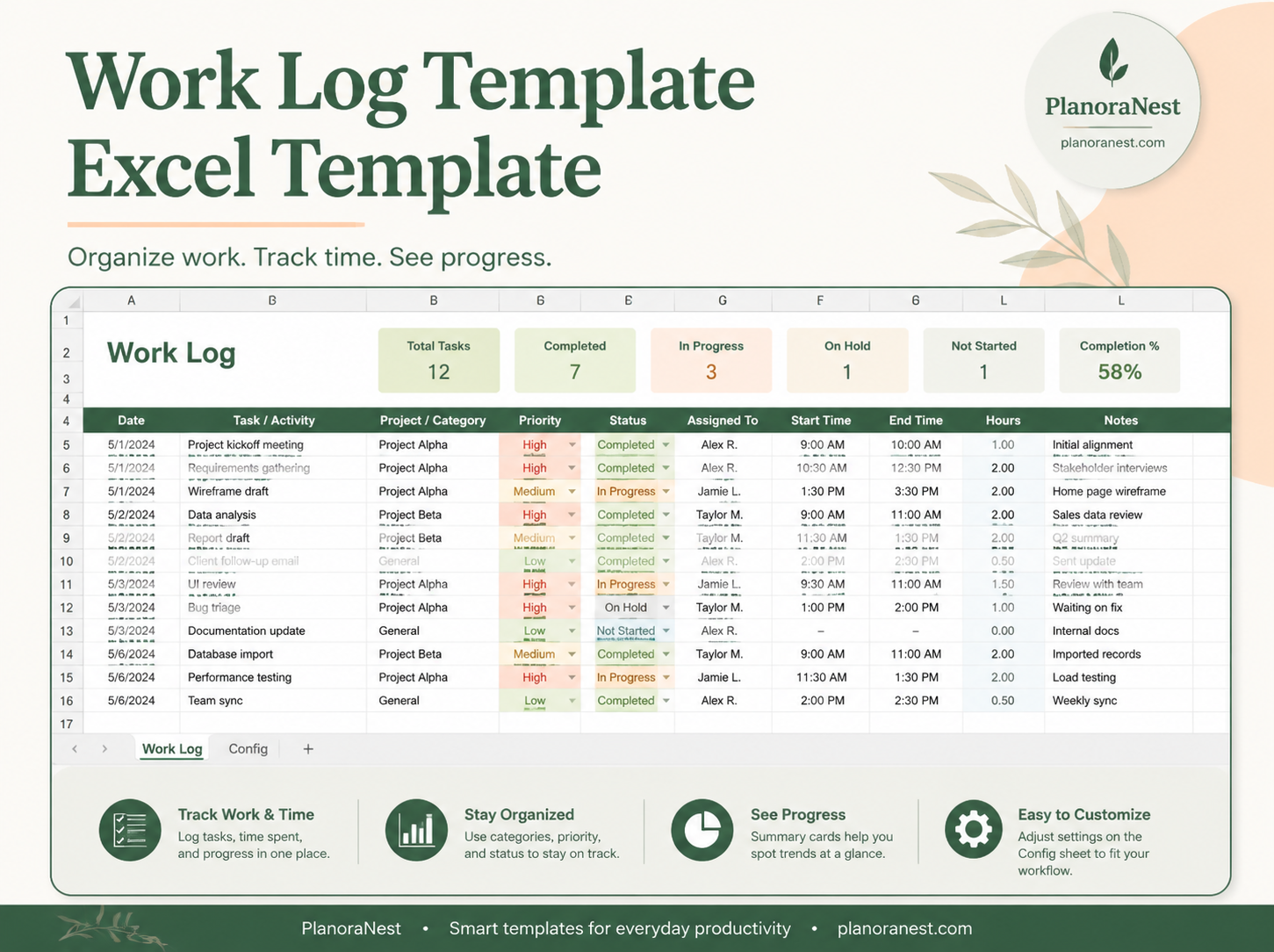
Rebuild fatigue, broken validation after paste storms, or onboarding a helper who should not reverse-engineer your formulas — those are signals. The Download To Do List Template Excel from PlanoNest (disclosure: we sell it) is a one-time-purchase workbook with ToDoList and Lists sheets — instant digital download, no subscription. Check the product page for current pricing.
Build path: How to Make a To Do List in Excel. Free-file caution: Free To Do List Template Excel. Daily focus: Daily To Do List Excel Template.
Operating note before you close the file
Before shutdown, clear filters and leave Priority honest. If you feel the urge to mark everything High so you will “see it,” stop — add a Due date instead. Visibility comes from dates and Status, not from crying wolf in the Priority column.
Keep language concrete under pressure
When a task stalls, write the blocker in Notes instead of inventing a new priority level. Priority inflation is how every row turns red and none of them get finished before lunch. A blocked task with a named owner of the blocker is still useful data; a vague High item is not.
Agree on Status words early
If you collaborate with one other person, agree on Status words in a short written note inside the workbook. A thirty-second legend prevents a week of filter arguments. Put the legend on the Lists sheet beside the dropdown sources and resist adding synonyms like Complete beside Done.
Archive finished work monthly
Archive is not failure. Moving Done rows off the working table keeps attention on what can still change. Monthly archive sheets also make it easy to answer what you actually finished without scrolling a thousand-line monster. Name archive tabs by month so searches stay boring and reliable.
Resist dashboard creep
A single COUNTIF for open High items is enough for most people. Charts that need weekly babysitting will be abandoned faster than a plain filtered Table. If a chart does not change a Monday decision, delete it and reclaim the space for Notes that name the next action.
Device reality check
When you evaluate any download — free or paid — open it on the device you actually use during the workday. A file that only looks good on a 27-inch monitor will not survive phone-side triage between meetings. Prefer readable columns over decorative title banners that steal the first twelve rows.
Planning versus doing
Protect the difference between planning and doing. The spreadsheet is a queue, not a trophy case. If you spend more time color-coding than completing, delete the decoration and return to Task, Priority, Due, Status, and Notes. Completion is the only dashboard that matters at the end of the day.
Frequently Asked Questions
Is Excel good enough for task management?
For personal and light team lists, yes. For cross-functional projects with SLAs and automations, use a dedicated tool and keep Excel for exports.
How many open tasks should I allow?
If you cannot scan the open list in under a minute, archive or defer. Soft target: under 30 open rows on the working sheet.
Should I use kanban columns in Excel?
Possible with status columns or separate boards, but a simple Table with Status filters is usually enough — and easier to maintain.
How do I stop co-authors from inventing Status words?
Lock Status with Data Validation Stop errors and keep the Lists sheet visible. If someone pastes over validation, repair the column once and document the paste rule in Start Here notes.
Should I color-code every Priority?
Only if color maps to the same dropdown values. Color without validation becomes decoration. Prefer conditional formatting driven by the Priority cell so the paint cannot lie when the value changes.