Task Checklist Excel: Choose the Right Layout

Compare basic, project, daily, and employee task checklist Excel layouts — and pick columns that keep work moving without overbuilding.
Type task checklist excel into Google and you land on download hubs, Microsoft’s to-do galleries, Reddit threads, and free task-list pages. The keyword is broad on purpose: people want a spreadsheet that behaves like a checklist, not a manifesto about Agile. This article helps you pick a layout — basic, daily, project, team/employee, or process checklist — before you drown in columns. For daily-system selection and product fit, see the Daily Task Checklist Excel Template hub.
Key takeaway: Match the layout to the job: daily focus, process steps, or assigned work. Extra columns feel powerful on day one and ignored by day four.
Checklist vs task list vs tracker
| Format | Best question | Typical columns |
|---|---|---|
| Checklist | Did every required step happen? | Step, Done, Order |
| Task list / to-do | What should I work on next? | Task, Priority, Due, Done |
| Task tracker | Where is each item in a workflow? | Owner, Status %, Dates |
Smartsheet’s free task list roundup separates basic lists, daily sheets, project lists, team lists, employee lists, and checklist templates for a reason — they answer different questions. Steal the pattern; do not merge all of them into one monster tab.
Daily completion habits are covered on the pillar — here we compare layouts.
Layout patterns that show up in SERPs
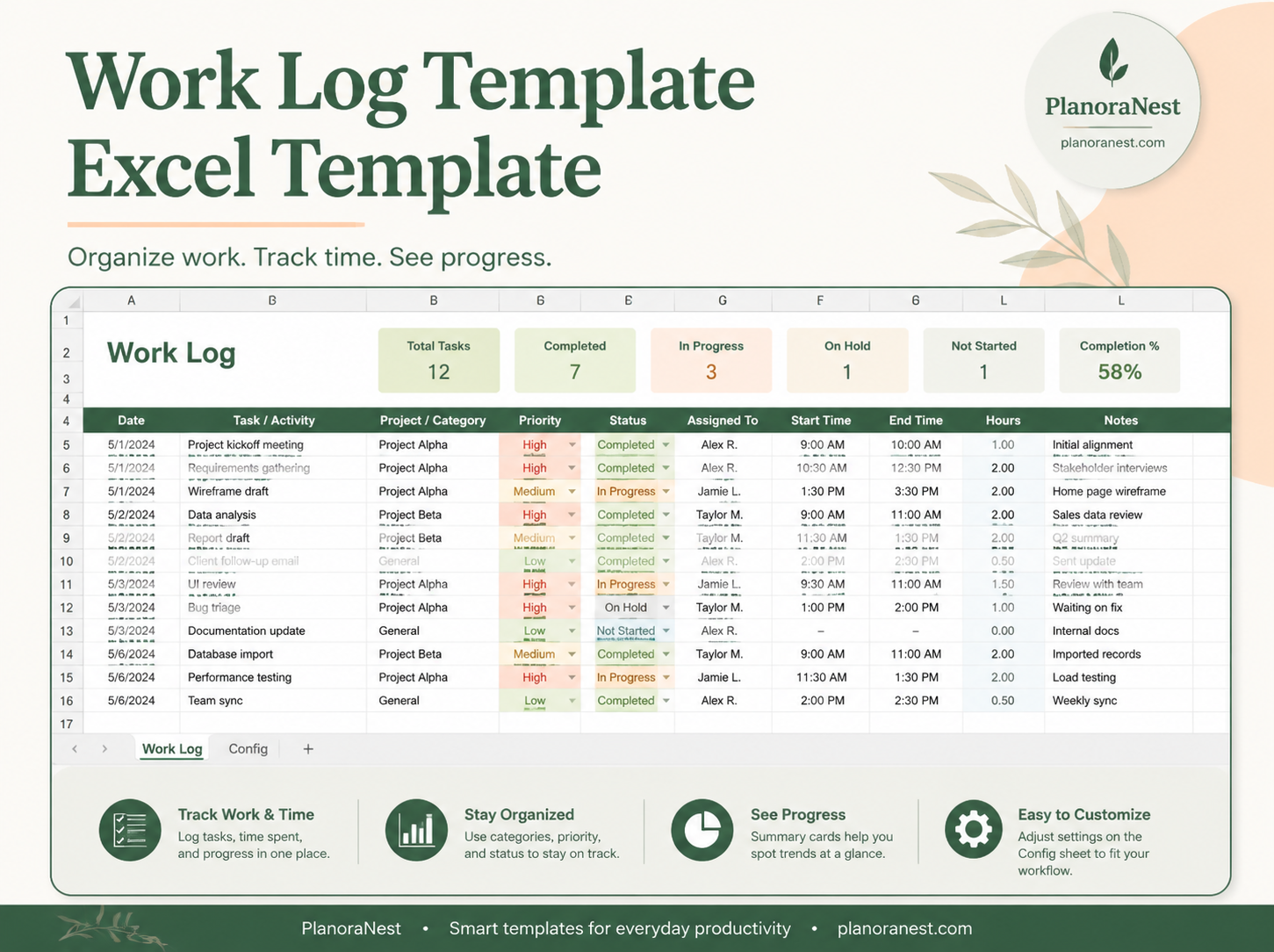
Basic task list. Task, Due Date, Status, Priority, Notes, Done. Good default for individuals.
Daily task list. Date-scoped rows or a single-day block. Best when priorities shift before lunch.
Project task list. Assigned To, Deliverable, % Done, Cost/Hours. Overkill for personal mornings.
Task checklist (process). Grouped High/Medium/Low or numbered steps for QC, onboarding, or events.
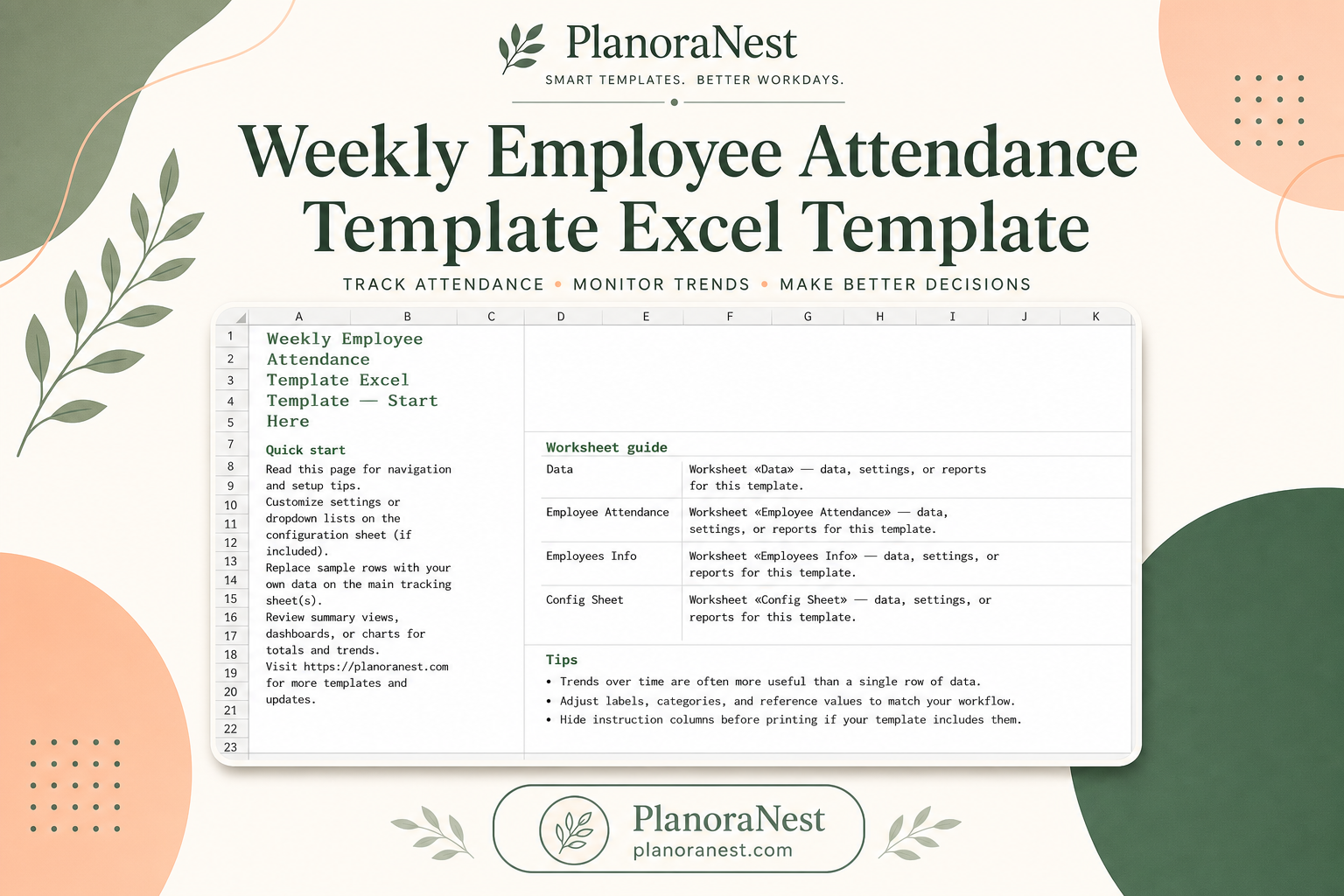
Employee / team list. Owner plus manager-facing status. See Employee Task List Template Excel.
Product highlight: If nobody reviews % Done weekly, delete the column. Empty percent fields create fake precision.
How to choose in five minutes
Pick a task checklist layout
- Write the question the sheet must answer in one sentence.
- List the three fields you will actually update daily.
- Add Owner only if more than one person touches the file.
- Add % Done only if a manager reviews progress on a cadence.
- Reject any template whose sample data needs a decoder ring.
Warning: Marketplace and free hubs often rank the same files under every keyword. Open the workbook and check the headers — the filename “task checklist” may actually be a Gantt.
Free hubs vs structured paid workbooks
Free collections from Microsoft, Smartsheet, and TeamGantt are excellent for sampling layouts. Third-party free template sites also appear constantly in image packs — useful for inspiration, uneven for support. A paid structured workbook makes sense when you want Start Here onboarding and a stable daily system without rebuilding Form Controls. PlanoNest’s daily task checklist template is a one-time purchase with instant download; confirm pricing on the product page. Selection criteria live on the pillar page.
Practical column diet
Keep:
- Done / checkbox
- Task (verb + object)
- Priority or Due Date (pick one primary sorting key)
- Optional Owner for shared files
Cut:
- Duplicate status fields (Status + % Done + RAG + Emoticon)
- Narrative journals inside Notes
- Decorative columns you never filter on
For interactive boxes, continue to Excel Checklist Template with Checkbox. For building from scratch, use How to Make a Checklist in Excel.
Keep the list honest for a full week
A daily checklist only helps if tomorrow’s sheet does not inherit yesterday’s guilt. Archive completed rows, carry forward only true leftovers, and rewrite priorities against the calendar — not against a growing pile of unchecked boxes. If the same item rolls three days in a row, split it or schedule a real block of time. That habit matters more than another formula.
Teams that share one workbook should agree on status words (Done, Waiting, Blocked) and who may clear someone else’s checkbox. Ambiguous status is how “almost finished” becomes invisible work. A short legend on the Start Here sheet prevents that drift.
When you print a day plan for a standup, hide helper columns and print only Task, Owner, and Priority. Screen and paper can show different views of the same data — that is a feature of Excel, not a failure of the template.
Make the spreadsheet boring on purpose
Fancy dashboards feel productive and then go stale. A durable checklist workbook is slightly boring: stable headers, predictable status words, and a Done column that always means the same thing. Resist the urge to add sparkline art or five priority colors unless your team already uses that language in standups.
Name files with dates or week numbers when you archive. “Final_v7_REAL” is not a system. If you need history for performance conversations, keep weekly snapshots in a read-only folder instead of forever-growing tabs.
Mobile editing is a bonus, not the design center. Optimize for the laptop review you actually do, then confirm Google Sheets or Excel Online behavior if someone must check a box from a phone.
Troubleshooting common checklist friction
Checkboxes jump when you sort. Prefer cell-based Insert → Checkbox values, or sort carefully after verifying Form Control links. If shapes drift, recreate the Done column rather than fighting orphaned controls.
Everyone invents new Status text. Lock a data-validation list: Open, Waiting, Blocked, Done. Free text status destroys filters.
The list is never empty. That is normal. Empty is not the goal — honest prioritization is. Celebrate clearing Must Move items, not achieving inbox zero theater.
Formulas break after a teammate pasted values. Protect progress cells and document which columns are inputs. A one-line note on Start Here saves a Friday firefight.
Frequently Asked Questions
Can you make a task list in Excel?
Yes. Start with Task + Done columns, then add Priority or Due Date. Microsoft’s free to-do templates are a fast baseline.
What is the difference between a task list and a checklist?
A task list is usually prioritized work to choose from. A checklist is often a required set of steps that should all be completed.
Should I use Excel or a task app?
Excel wins when you need offline files, light formulas, and no new seats. Task apps win for mobile notifications and heavy cross-team workflows.
How many tasks should appear on one sheet?
If you cannot scan the open list in under a minute, filter completed items or split daily vs backlog tabs.
Where do I go for a daily-focused system?
Use Daily Task List Template Excel for one-day planning, and the hub for template vs DIY decisions.
Keep the list honest for a full week
A daily checklist only helps if tomorrow’s sheet does not inherit yesterday’s guilt. Archive completed rows, carry forward only true leftovers, and rewrite priorities against the calendar — not against a growing pile of unchecked boxes. If the same item rolls three days in a row, split it or schedule a real block of time. That habit matters more than another formula.
Teams that share one workbook should agree on status words (Done, Waiting, Blocked) and who may clear someone else’s checkbox. Ambiguous status is how “almost finished” becomes invisible work. A short legend on the Start Here sheet prevents that drift.
When you print a day plan for a standup, hide helper columns and print only Task, Owner, and Priority. Screen and paper can show different views of the same data — that is a feature of Excel, not a failure of the template.
Make the spreadsheet boring on purpose
Fancy dashboards feel productive and then go stale. A durable checklist workbook is slightly boring: stable headers, predictable status words, and a Done column that always means the same thing. Resist the urge to add sparkline art or five priority colors unless your team already uses that language in standups.
Name files with dates or week numbers when you archive. “Final_v7_REAL” is not a system. If you need history for performance conversations, keep weekly snapshots in a read-only folder instead of forever-growing tabs.
Mobile editing is a bonus, not the design center. Optimize for the laptop review you actually do, then confirm Google Sheets or Excel Online behavior if someone must check a box from a phone.
Troubleshooting common checklist friction
Checkboxes jump when you sort. Prefer cell-based Insert → Checkbox values, or sort carefully after verifying Form Control links. If shapes drift, recreate the Done column rather than fighting orphaned controls.
Everyone invents new Status text. Lock a data-validation list: Open, Waiting, Blocked, Done. Free text status destroys filters.
The list is never empty. That is normal. Empty is not the goal — honest prioritization is. Celebrate clearing Must Move items, not achieving inbox zero theater.
Formulas break after a teammate pasted values. Protect progress cells and document which columns are inputs. A one-line note on Start Here saves a Friday firefight.